Erbium vs Fractional CO₂ Laser Resurfacing: Why Erbium Can Look “Shockingly” Good
If you’re choosing between Erbium laser resurfacing (Er:YAG) and fractional CO₂ laser, you’re basically choosing between two elite skin-resurfacing technologies that both remodel collagen and improve texture—but with very different “feel,” downtime, and the type of glow they deliver. The right option depends on your goals (wrinkles, acne scars, pores, pigment, laxity), your timeline, and your skin type.
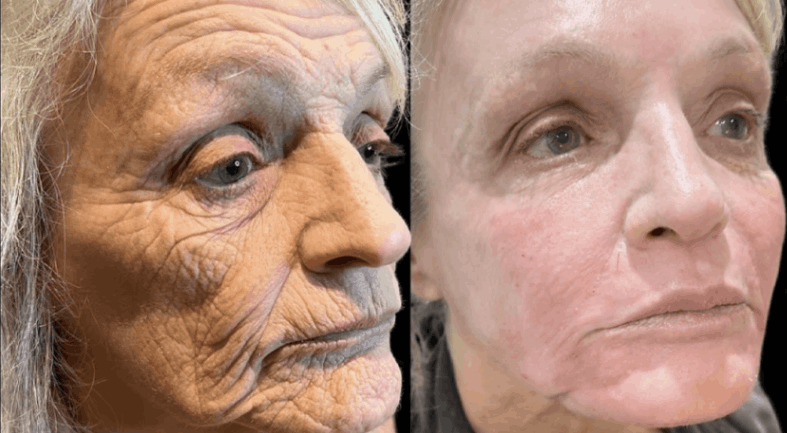
Erbium is often loved for its remarkable, clean-surface transformation: smoother texture, tighter-looking pores, fresher tone, and a “polished” look that can feel dramatic—especially after a single session. Many patients describe the result as “I look like myself… but significantly younger,” and in the right candidate it can create that “wow” effect people associate with turning back the clock.
You’ll sometimes hear bold phrases like “look 30 years younger after one Erbium session.” Here’s the honest, high-value version: some patients can look many years younger after one treatment, especially when the main issues are fine lines, sun damage, crepey texture, and dullness. But outcomes vary with age, depth of wrinkles/scars, skin quality, and aftercare—and no ethical clinic should guarantee a specific number of years.
Mechanistically, Erbium targets water in the skin very efficiently, allowing precise ablation (removing microscopic layers) with comparatively less residual heat than CO₂. Translation: excellent surface refinement with typically less thermal injury, which often means faster healing and less prolonged redness in many patients, while still stimulating collagen.
Fractional CO₂ is the “heavy-hitter” when you want deep collagen remodeling—especially for deeper wrinkles, more pronounced textural damage, and certain scar patterns. Because CO₂ tends to create more heat in the tissue, it can deliver powerful tightening and remodeling, but that often comes with more downtime and a higher chance of longer redness, especially if aggressive settings are used.
In real-world terms, Erbium often wins for:
- Patients who want dramatic brightness + smoothness
- Fine lines, early-moderate wrinkles, enlarged pores, rough texture
- Those who want strong results with a more manageable recovery
-
Patients who are cautious about prolonged redness
CO₂ often wins for deeper etched lines, more advanced photodamage, and cases where a more intense collagen “push” is needed.
Downtime is usually where patients feel the difference most. While recovery varies by intensity, Erbium commonly involves a shorter healing window (a few days to about a week for many protocols), whereas fractional CO₂ often asks for more downtime due to more heat-driven inflammation and longer-lasting redness. The tradeoff is that CO₂ can be “worth it” when deeper remodeling is the priority.
Comfort matters too. Both treatments typically use strong topical anesthetic, and sometimes additional comfort measures depending on depth. Patients often describe the sensation as heat + stinging during passes, followed by a sunburn-like feeling. Erbium is frequently perceived as “easier” during recovery for many people, but the experience depends on settings, your pain sensitivity, and your provider’s technique.
Safety and skin type are critical. In darker skin tones or patients prone to post-inflammatory hyperpigmentation (PIH), the approach must be carefully chosen and customized. In many cases, providers lean toward more conservative settings, staged sessions, and diligent pigment-prep. Whether Erbium or CO₂ is best for you should be decided after a clinical assessment of your skin type, history of pigmentation, scarring tendency, and lifestyle (sun exposure, work schedule).
Bottom line: if you want remarkable visible change with a refined “new skin” look and you’re aiming for a transformation that still feels realistic and safe, Erbium is often the star—especially for texture, glow, fine lines, and visible freshness. If your main goal is deep remodeling for more advanced lines or scar texture, fractional CO₂ can be the better tool. The best outcomes often come from a personalized plan—and sometimes combining resurfacing with complementary treatments over time.
FAQs:
1) What is the difference between Erbium (Er:YAG) laser resurfacing and fractional CO₂ laser resurfacing?
Erbium (Er:YAG) laser resurfacing is typically known for very precise surface renewal with comparatively less residual heat, which often supports a cleaner texture change and more manageable recovery for many patients. Fractional CO₂ laser resurfacing generally delivers stronger thermal collagen remodeling, which can be ideal for deeper lines and more advanced texture, but may involve more downtime and longer redness. The best choice depends on your main concern (fine lines, scars, pores, pigment), your skin type, and your downtime tolerance.
2) How many sessions of Erbium (Er:YAG) laser resurfacing do I need compared with fractional CO₂ laser resurfacing?
Session count depends on your baseline texture, wrinkle depth, scar type, and how aggressive the settings are. Many patients see a remarkable visible change after 1 Erbium (Er:YAG) laser resurfacing session for glow and surface smoothness, while others achieve best results with 2–3 sessions spaced several weeks apart. Fractional CO₂ laser resurfacing may be done as one stronger session or a series of lighter treatments for collagen remodeling. Your plan should be individualized after an in-person skin assessment.
3) Can Erbium (Er:YAG) laser resurfacing make me look “30 years younger” after one session?
A single Erbium (Er:YAG) laser resurfacing session can create dramatic improvements in skin texture, brightness, pore appearance, and fine lines, and many patients feel they look significantly younger after one treatment—especially if the main issue is sun damage and early-to-moderate aging. However, a specific claim like “30 years younger” isn’t a guaranteed outcome because results vary based on age, collagen quality, depth of wrinkles/scars, skin type, and healing response. The best approach is setting a realistic goal for your skin while still aiming for a noticeable, “wow” transformation.
4) Is Erbium (Er:YAG) laser resurfacing or fractional CO₂ laser resurfacing better for acne scars?
Both Erbium (Er:YAG) laser resurfacing and fractional CO₂ laser resurfacing can improve acne scars, but the best choice depends on the scar pattern (rolling, boxcar, ice-pick), depth, and skin type. Erbium often excels at blending texture and refining the surface, which can be very noticeable for mild-to-moderate scarring. Fractional CO₂ can be preferred for more severe scars or when deeper collagen remodeling is needed. Many advanced acne-scar plans also combine resurfacing with targeted scar techniques for best outcomes.
5) Is Erbium (Er:YAG) laser resurfacing or fractional CO₂ laser resurfacing better for wrinkles and skin tightening?
For fine lines and surface wrinkles, Erbium (Er:YAG) laser resurfacing often delivers a very polished, refreshed look. For deeper wrinkles and stronger collagen remodeling, fractional CO₂ laser resurfacing may have an advantage. That said, neither treatment is a substitute for surgical lifting in cases of significant laxity; these lasers improve texture + collagen quality, and the “tightening” is real but still within non-surgical limits.
6) What does Erbium (Er:YAG) laser resurfacing feel like during the procedure compared with fractional CO₂ laser resurfacing?
During Erbium (Er:YAG) laser resurfacing and fractional CO₂ laser resurfacing, most patients feel intense heat with stinging or prickly sensations, while the skin is protected with medical-grade topical numbing (and sometimes additional comfort measures depending on depth). Many patients report the recovery after Erbium feels more manageable for them, but the experience depends heavily on laser settings, your sensitivity, and technique.
7) What is the downtime after Erbium (Er:YAG) laser resurfacing vs downtime after fractional CO₂ laser resurfacing?
Downtime depends on how aggressively the skin is resurfaced, but generally Erbium (Er:YAG) laser resurfacing often has shorter recovery with redness/peeling improving sooner for many protocols. Fractional CO₂ laser resurfacing commonly involves more downtime, and redness can last longer because of the greater thermal effect. Your provider should outline a realistic day-by-day timeline (when you’ll peel, when makeup is safe, when you can return to work/social events).
8) What should I do before Erbium (Er:YAG) laser resurfacing or before fractional CO₂ laser resurfacing to reduce risks and maximize results?
Before Erbium (Er:YAG) laser resurfacing or fractional CO₂ laser resurfacing, you typically need to avoid tanning and strong sun exposure, pause irritating products (like strong retinoids/acids) for an appropriate window, and disclose medical history such as cold sores (HSV), tendency for pigmentation (PIH), recent isotretinoin use, or abnormal scarring. A tailored pre-care plan may include pigment-prep skincare or antiviral prevention when indicated—this is especially important for safety and a clean result.
9) What is the best aftercare after Erbium (Er:YAG) laser resurfacing and after fractional CO₂ laser resurfacing?
Aftercare for Erbium (Er:YAG) laser resurfacing and fractional CO₂ laser resurfacing usually focuses on: gentle cleansing, frequent moisturizing/barrier repair, avoiding picking, and strict sun protection. You’ll typically avoid hot showers/saunas, heavy exercise early on, swimming pools, alcohol-based skincare, exfoliants, and unapproved active ingredients until your provider confirms healing. Great aftercare protects your results and reduces risks like prolonged redness, infection, or post-inflammatory pigmentation.
10) How do Erbium (Er:YAG) laser resurfacing and fractional CO₂ laser resurfacing compare to IPL photofacial, non-ablative fractional lasers, and RF microneedling?
Erbium (Er:YAG) laser resurfacing and fractional CO₂ laser resurfacing are true resurfacing procedures that target texture, fine lines, pores, and scars by renewing the skin surface and stimulating collagen. IPL mainly targets pigment and redness (it’s not a resurfacing laser). Non-ablative fractional lasers can improve collagen with less downtime, but often need more sessions and may not deliver the same “new skin” surface change. RF microneedling improves collagen and pores/scars but does not resurface the skin the same way ablative lasers do. The best plan often combines modalities based on whether your priority is pigment, redness, texture, scars, or laxity.